
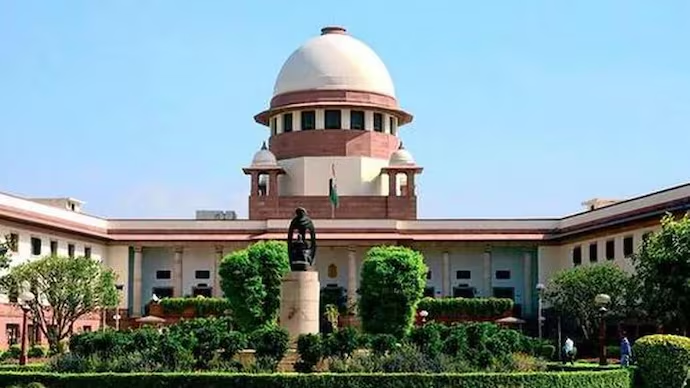
The Supreme Court of India is the highest judicial authority in the country. It plays an important role in protecting fundamental rights, interpreting laws, and delivering justice. People from Delhi and other parts of India can approach the Supreme Court for specific legal matters, including appeals, constitutional issues, and cases involving important questions of law.
Understanding Supreme Court case status and court procedures in Delhi can help individuals, lawyers, and legal professionals follow their cases and understand the steps involved in the judicial process.
Today, many court services are available online. People can check case status, view hearing dates, access judgments, and find important case details through official court websites. However, knowing how to use these services and understanding court procedures can make the process easier.
This article explains how to check Supreme Court case status, understand court procedures, and access important legal information in Delhi.
What Is the Supreme Court of India?
The Supreme Court of India is located in New Delhi and serves as the highest court in the Indian judicial system. It hears appeals from High Courts and other courts, deals with certain constitutional matters, and protects the fundamental rights guaranteed by the Constitution.
The Supreme Court performs several important functions, including:
-
Hearing appeals in civil and criminal cases.
-
Deciding constitutional disputes.
-
Interpreting laws and constitutional provisions.
-
Hearing petitions involving fundamental rights.
-
Reviewing certain judgments through review petitions.
-
Taking up matters of national and public importance.
The Supreme Court follows established legal procedures. A person cannot file every type of case directly before it. The appropriate legal remedy depends on the nature of the dispute, the relevant law, and the stage of the case.
What Is Supreme Court Case Status?
Supreme Court case status refers to the current position of a case filed before the Court. It provides information about the progress of the matter, including registration details, hearing dates, orders, and the latest procedural developments.
Checking case status helps litigants and lawyers understand what has happened in a case and what may happen next.
Case status information may include:
-
Case number and case type.
-
Names of the parties involved.
-
Filing and registration details.
-
Names of the advocates on record.
-
Bench or court details, where available.
-
Previous and upcoming hearing dates.
-
Current case stage.
-
Orders and judgments, when published.
-
Final disposal details, if the case has been decided.
The availability of information depends on the case record and the court’s publication practices. Some information may not be available for every case.
How to Check Supreme Court Case Status Online in Delhi
People living in Delhi can check Supreme Court case details online without visiting the Court in person.
The official Supreme Court website provides case-related services and links to online court information.
Step 1: Visit the Official Website
Open the official Supreme Court of India website. Look for the case status, case information, or related online services section.
Using the official website helps reduce the risk of relying on incorrect or outdated information from unofficial sources.
Step 2: Select the Appropriate Search Option
Depending on the available service, you may be able to search for a case using details such as:
-
Diary number.
-
Case number.
-
Case type.
-
Year of filing.
-
Party name.
-
Advocate details, where supported.
Choose the search method that matches the information available to you.
Step 3: Enter the Correct Details
Enter the case information carefully. For example, if you are searching by case number, make sure the case type and year are correct.
If you have a diary number received at the time of filing, it may help you locate the matter during the initial processing stage.
Step 4: Review the Case Information
After submitting the search, review the available details. Check the parties’ names, case number, case stage, and hearing information to make sure you have found the correct matter.
Step 5: Check Orders and Hearing Updates
If an order or judgment has been uploaded, open the relevant document and read it carefully. Hearing dates and listings can change, so check the latest information before travelling to court or making legal decisions.
Important: Online case status is useful for tracking a matter, but it does not replace official court orders, certified copies where required, or advice from a qualified lawyer.
Understanding Supreme Court Diary Number and Case Number
A diary number and a registered case number are not the same.
A diary number is generally assigned when a filing is received by the Court. It helps identify and track the matter during the initial filing and scrutiny process.
A case number is generally assigned after the matter is registered under the applicable court procedure.
For example, a filing may initially be tracked using its diary number while the Registry examines whether the documents comply with filing requirements.
If defects are identified, they may need to be corrected before registration can proceed. Therefore, a matter appearing under a diary number does not necessarily mean that it has been fully registered or listed for hearing.
Supreme Court Court Procedures in Delhi
The Supreme Court follows formal procedures for filing, listing, hearing, and deciding cases. The exact process depends on the type of matter and the applicable rules.
1. Filing a Case or Petition
The first stage is preparing and filing the appropriate legal documents.
Depending on the case, these documents may include:
-
Petition or appeal.
-
Supporting affidavit.
-
Relevant judgments and orders.
-
List of dates and events.
-
Statement of facts and legal grounds.
-
Required annexures.
-
Proof of payment of applicable court fees.
-
Other documents required under the Supreme Court Rules and relevant directions.
Documents must comply with the applicable format and procedural requirements. The filing may be made through the prescribed filing process, including electronic filing where permitted.
2. Scrutiny by the Registry
After filing, the Supreme Court Registry examines the documents for compliance with procedural requirements.
The Registry may identify defects such as missing documents, incorrect formatting, incomplete information, or other filing issues.
Where defects are raised, the petitioner or their legal representative generally needs to correct them within the applicable time limit or seek appropriate relief if necessary.
The Registry’s scrutiny is an important step because a filing may not proceed to registration or listing until relevant requirements are met.
3. Registration of the Case
Once the required procedural requirements are satisfied, the matter may be registered and assigned a case number.
The registered case number helps parties and lawyers track the matter through the official case status system.
Registration does not guarantee that the petition will be admitted or that the Court will grant the requested relief. Those questions depend on the applicable law and the Court’s consideration of the matter.
4. Listing and Hearing Dates
After the relevant filing and listing requirements are met, the matter may be listed before an appropriate bench.
The listing information may show the date, court or bench details, and other available information.
Not every registered case is heard immediately. The timing depends on factors such as the type of case, procedural compliance, urgency, applicable listing rules, and the Court’s schedule.
If a matter is urgent, a party may need to follow the prescribed procedure for requesting urgent listing or interim relief.
5. Court Hearing
During a hearing, the advocates present legal arguments and address questions from the bench. Depending on the stage and nature of the case, the Court may consider preliminary issues, hear arguments on the merits, issue directions, or pass an interim order.
The Court may also direct parties to file additional documents or responses.
Some matters may be decided at an early stage, while others require multiple hearings.
6. Final Judgment or Order
After considering the relevant legal and factual issues, the Court may deliver a judgment or pass an order.
The decision may grant relief, dismiss the petition, issue directions, or decide only a particular procedural question.
Parties should read the actual order to understand its effect. A short case status entry may not explain all the directions or legal consequences contained in the order.
Types of Cases Heard by the Supreme Court
Different kinds of matters can come before the Supreme Court through different legal routes.
Civil Appeals
Civil appeals may arise from decisions of High Courts and other forums when the law permits an appeal to the Supreme Court. The availability of an appeal depends on the relevant statute, constitutional provision, or procedural requirement.
Criminal Appeals
The Supreme Court hears certain criminal appeals, including matters that meet the requirements under the Constitution and applicable criminal procedure laws.
Special Leave Petitions
A Special Leave Petition (SLP) may be filed under Article 136 of the Constitution seeking special permission to appeal against a judgment, decree, determination, sentence, or order of a court or tribunal in appropriate cases.
Granting special leave is discretionary. Filing an SLP does not automatically mean that an appeal will be admitted.
Writ Petitions
Under Article 32 of the Constitution, a person may approach the Supreme Court for the enforcement of fundamental rights. The Court’s jurisdiction under this provision is specifically connected with fundamental rights.
Other writ remedies may be available before a High Court under Article 226, depending on the circumstances.
Review Petitions
In limited circumstances, a party may seek review of a Supreme Court judgment under Article 137 of the Constitution and the applicable rules.
A review petition is not simply another opportunity to argue the entire case. It must satisfy the relevant legal standards.
How to Check Supreme Court Hearing Dates and Orders
Checking hearing dates and orders regularly is important for litigants and lawyers.
You can use the official Supreme Court website to access available case information, daily or advance lists, and published judgments or orders.
When checking a hearing date, confirm:
-
Whether the case appears in the relevant list.
-
The date and bench details.
-
The item’s position in the cause list, where provided.
-
Any recent directions or changes.
-
Whether the matter has been adjourned or disposed of.
A listing does not always mean that a case will be heard at a particular time. Court schedules can change, and matters may be passed over, adjourned, or taken up according to the bench’s schedule.
For this reason, it is sensible to verify the latest official information before attending court.
Can a Person File a Case Directly in the Supreme Court?
Not every legal dispute can be filed directly before the Supreme Court.
The correct forum depends on the type of dispute, the applicable law, and whether the matter must first be taken to a lower court or High Court.
For example, many civil and criminal disputes begin before trial courts or other competent forums. Appeals may later reach the Supreme Court if the legal requirements are satisfied.
A constitutional petition under Article 32 is available for the enforcement of fundamental rights. Other matters may require a different route, such as an appeal or an SLP.
Before filing, it is important to identify the correct legal remedy, applicable limitation period, required documents, and filing procedure.
Role of Lawyers in Supreme Court Procedures
Supreme Court matters involve technical legal and procedural requirements. The assistance of a qualified legal professional can help parties prepare documents, comply with deadlines, and understand the appropriate legal remedy.
Under the Supreme Court’s applicable rules, an Advocate-on-Record (AOR) has a specific role in filing and acting for a party in proceedings before the Court, subject to the relevant rules and exceptions.
A lawyer may assist with:
-
Selecting the appropriate legal remedy.
-
Preparing petitions and supporting documents.
-
Reviewing limitation periods.
-
Addressing Registry defects.
-
Monitoring case status and listing information.
-
Presenting legal arguments.
-
Explaining judgments and subsequent options.
People should verify the qualifications and role of any legal professional they engage.
Important Tips for Tracking a Supreme Court Case in Delhi
Keep these practical points in mind when following a case:
-
Save your diary and case numbers. These details can help you locate the correct record.
-
Use official court sources. Prefer the Supreme Court’s official website for case information.
-
Check updates regularly. Hearing dates, case stages, and orders may change.
-
Keep copies of documents. Maintain the petition, filing receipts, orders, and relevant correspondence.
-
Monitor procedural deadlines. Respond promptly to Registry defects or court directions.
-
Read the full order. Do not rely only on a brief status description.
-
Seek legal advice when needed. A lawyer can explain procedural options and the effect of a court order.
Conclusion
Understanding Supreme Court case status and court procedures in Delhi can help people follow legal proceedings more effectively. From checking diary numbers and registered case numbers to reviewing hearing dates, orders, and judgments, official online services make important case information easier to access.
However, every case follows a procedure based on its nature and the applicable law. Filing a petition, completing Registry scrutiny, obtaining registration, attending hearings, and receiving a final decision are distinct stages.
For accurate updates, always use official Supreme Court resources and read the relevant orders carefully. If you are planning to file a petition or need to understand the next step in an existing matter, consider consulting a qualified legal professional.
Frequently Asked Questions (FAQs)
1. How can I check Supreme Court case status in Delhi?
Visit the official Supreme Court of India website and use the available case information or status service. Search using the case number, diary number, party name, or another supported detail.
2. Can I check Supreme Court case status using a diary number?
Yes, where the official search service supports diary-number searches. A diary number can help track a filing before or during the registration process.
3. What does a case being under scrutiny mean?
It generally means the Registry is examining the filing for compliance with procedural requirements. If defects are identified, they may need to be corrected before the case proceeds further.
4. How can I find my next Supreme Court hearing date?
Check the official case status and relevant cause list. Verify the latest listing information because dates and schedules can change.
5. Can I file an SLP directly in the Supreme Court?
An SLP may be filed under Article 136 where the relevant legal requirements are met. The Supreme Court decides whether to grant special leave, and filing does not guarantee admission.
6. Do I need an Advocate-on-Record for a Supreme Court case?
Supreme Court filing and representation rules generally require an Advocate-on-Record to act for parties, subject to applicable rules and exceptions. Confirm the requirements for your specific matter.
7. How do I obtain a Supreme Court judgment or order?
Check the official website for published judgments and orders. If a formal or certified copy is required, follow the Court’s applicable procedure.