
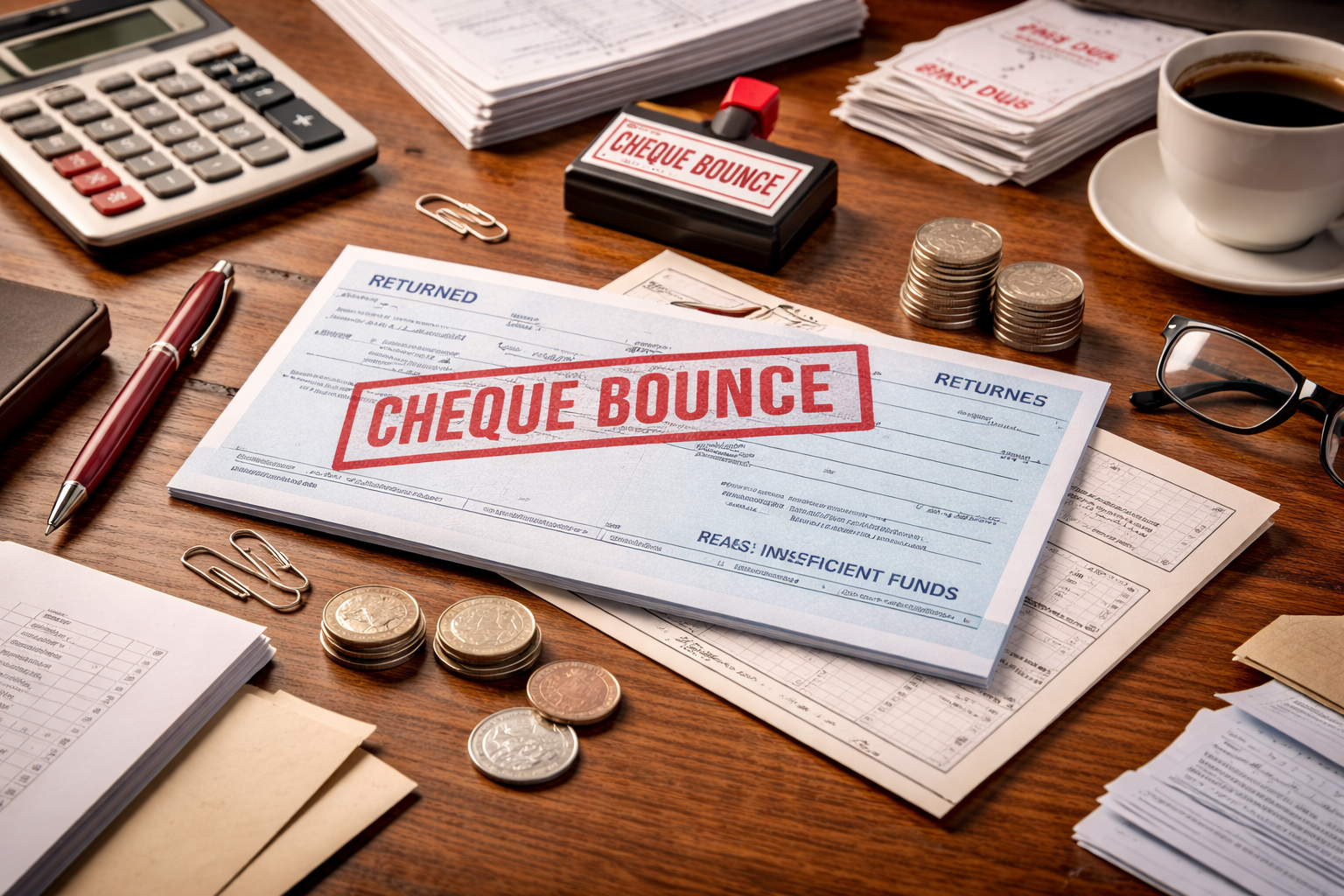
Cheque bounce disputes are common in both personal and commercial transactions. Timely legal action can help recover the outstanding amount while ensuring compliance with the legal process. Understanding the causes, legal provisions, penalties, and recovery procedures is essential for individuals and businesses dealing with cheque transactions.
What is a Cheque Bounce?
A cheque bounce occurs when a bank refuses to honour a cheque presented for payment. The bank returns the cheque along with a cheque return memo stating the reason for dishonour.
A dishonoured cheque can lead to both civil recovery proceedings and criminal prosecution, depending on the facts of the case.
Common Reasons for Cheque Bounce
Cheques may be dishonoured for several reasons, including:
- Insufficient funds in the bank account.
- Signature mismatch.
- Account closed.
- Payment stopped by the drawer.
- Overwriting or alteration on the cheque.
- Incorrect cheque details.
- Expired or stale cheque.
- Difference in words and figures.
- Damaged or mutilated cheque.
- Frozen bank account.
Among these, insufficient balance is the most common reason for initiating legal proceedings under the Negotiable Instruments Act.
Legal Framework for Cheque Bounce Cases
Cheque bounce matters in India are governed primarily by:
- Negotiable Instruments Act, 1881.
- Section 138 (Dishonour of Cheque).
- Section 139 (Presumption in favour of holder).
- Section 141 (Offences by companies).
- Relevant provisions of the Code of Criminal Procedure (CrPC) and the Bharatiya Nagarik Suraksha Sanhita (BNSS), where applicable.
The law aims to ensure the credibility of cheque transactions and protect the interests of the payee.
Essential Conditions for Filing a Cheque Bounce Case
For a complaint under Section 138 to be maintainable, certain legal requirements must generally be fulfilled:
- The cheque must have been issued for the discharge of a legally enforceable debt or liability.
- The cheque should be presented to the bank within its validity period.
- The cheque must be returned unpaid by the bank.
- The payee should issue a legal demand notice to the drawer within the prescribed time after receiving information about the dishonour.
- The drawer must fail to make payment within the statutory period after receiving the notice.
- The complaint should be filed before the competent court within the prescribed limitation period.
Failure to comply with these procedural requirements may affect the maintainability of the complaint.
Legal Notice in Cheque Bounce Cases
A legal demand notice is a crucial step before initiating criminal proceedings. The notice typically includes:
- Details of the cheque.
- Amount involved.
- Reason for dishonour.
- Demand for payment of the cheque amount.
- Time granted for payment as per law.
- Intimation of legal consequences in case of non-payment.
A properly drafted legal notice often encourages settlement without prolonged litigation.
Court Procedure
The legal process generally involves:
- Issuance of a legal demand notice.
- Waiting for the statutory payment period.
- Filing of a criminal complaint before the competent court.
- Court taking cognizance of the complaint.
- Issuance of summons to the accused.
- Recording of evidence.
- Cross-examination of witnesses.
- Final arguments.
- Judgment and appropriate relief.
Depending on the circumstances, parties may also explore mediation or settlement during the proceedings.
Penalties for Cheque Bounce
If the court finds the accused guilty under Section 138 of the Negotiable Instruments Act, penalties may include:
- Imprisonment as provided under law.
- Monetary fine.
- Compensation to the complainant.
- Payment of litigation costs where applicable.
The exact punishment depends on the facts, evidence, and judicial discretion.
Civil Recovery Along with Criminal Proceedings
Apart from criminal proceedings under the Negotiable Instruments Act, the payee may also pursue civil remedies for recovery of the outstanding amount, depending on the facts of the case.
Civil remedies may include:
- Money recovery suits.
- Commercial recovery proceedings.
- Arbitration, where contractually applicable.
- Settlement through mediation or negotiation.
Importance of Legal Representation
Professional legal assistance can help with:
- Drafting legal notices.
- Evaluating the merits of the case.
- Filing complaints within limitation.
- Court representation.
- Evidence preparation.
- Negotiation and settlement.
- Recovery strategies.
- Appeals, where necessary.
Experienced legal representation ensures that procedural requirements are properly followed.
Preventive Measures
Individuals and businesses can reduce the risk of cheque bounce disputes by:
- Verifying the credibility of the payer.
- Accepting post-dated cheques only from reliable parties.
- Maintaining proper transaction records.
- Executing written agreements.
- Presenting cheques within their validity period.
- Preserving bank return memos and correspondence.
- Following up promptly after dishonour.
Good documentation strengthens the legal position in case of litigation.
Business Impact of Cheque Bounce
Cheque dishonour can negatively affect businesses by:
- Disrupting cash flow.
- Delaying payments.
- Increasing legal expenses.
- Damaging commercial relationships.
- Affecting operational planning.
- Creating financial uncertainty.
Prompt legal action helps minimize these risks and improve recovery prospects.
Conclusion
Cheque bounce cases are among the most frequently litigated financial disputes in India. The legal framework under the Negotiable Instruments Act provides effective remedies to recover dues and maintain the credibility of cheque-based transactions. Acting promptly, issuing a valid legal notice, preserving documentary evidence, and seeking experienced legal guidance can significantly improve the chances of a successful outcome. Whether you are an individual, business owner, or corporate entity, understanding your legal rights and responsibilities is essential for protecting your financial interests.